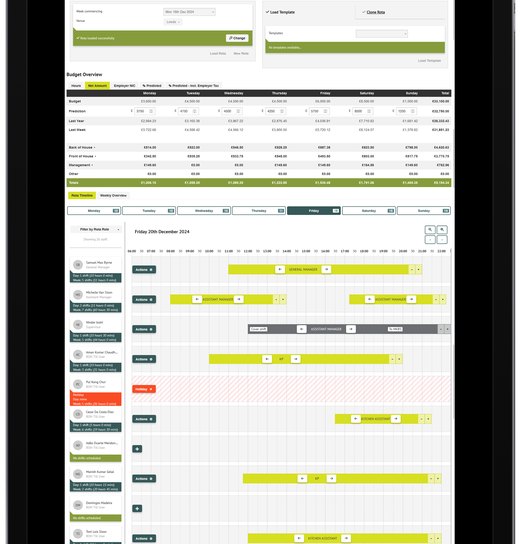
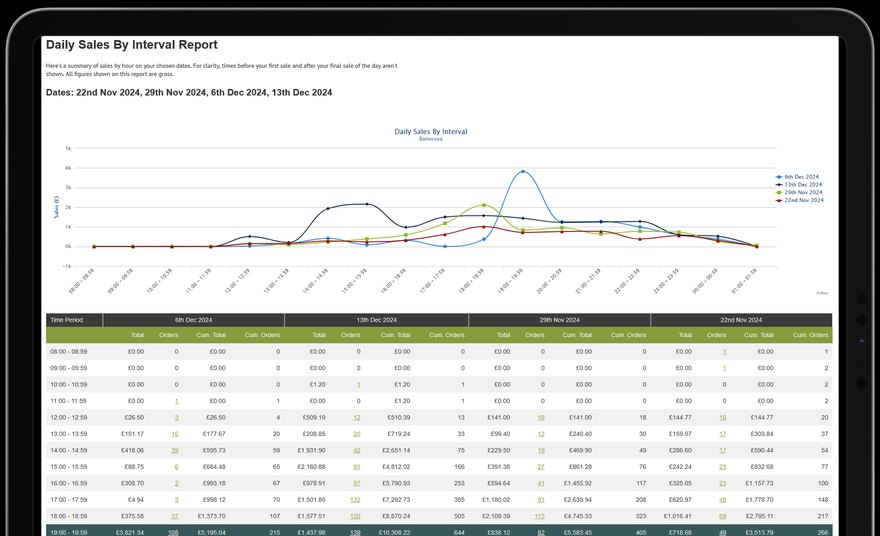
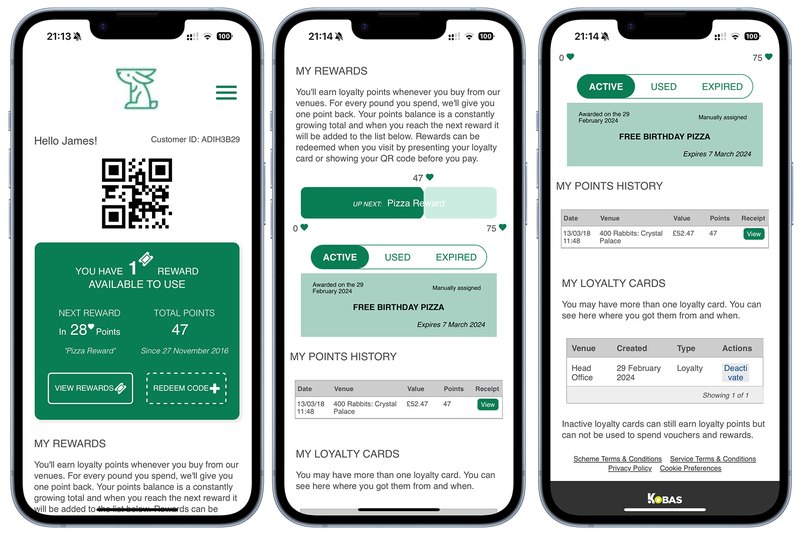
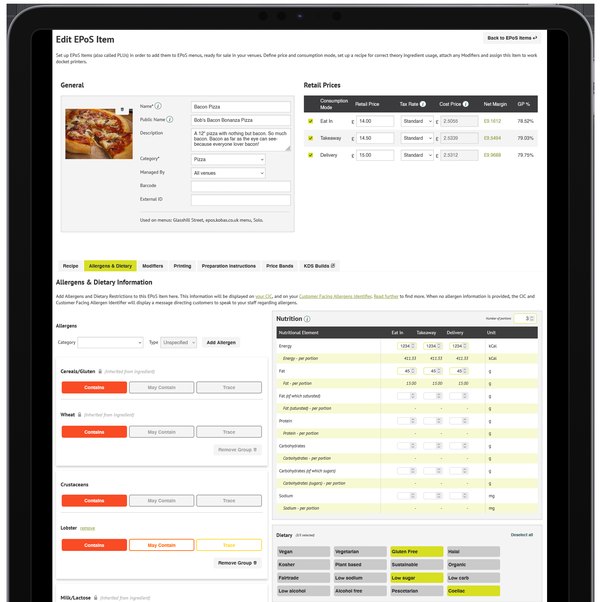
Kobas was the first system to combine multiple areas of hospitality business management into a single application. By combining point of sale, self-order/kiosks, daily operations, stock management, customer loyalty, reservations, marketing, recruitment, applicant tracking, HR, rotas and more into a single platform, operators get an unrivalled view of their business.
Kobas started in a very inauspicious way. A group of friends who ran a chain of bars in London approached me for a favour: could I automate their group GP, deliveries and stock counts. I was working on a number of smaller projects at the time and it did not take me long to get version one live. I will long remember the look of sheer wonder on my friends' faces when the output simply appeared on the screen, rather than having to be assembled from a stack of spreadsheets.
We kept building functionality into that early system over the next few years: bookings, rotas and day to day venue management. All was well. Then a larger group, whose head office was a few doors down, heard about it and got in touch. There were some fortunate circumstances at play here. The spreadsheets I had based the system on had been borrowed from that very company years before, and their new ops director turned out to be someone I had worked with in a former life in the nightlife scene back home. After a few months of back and forth they decided to trial Kobas, as it was now called, and the level changed.
With a bigger, private equity backed client I needed to up my game, and that of Kobas itself. Within a year they had specified and I had built an end-to-end HR module, which was still in use when I sold the business fifteen years later, and I had upgraded a lot of the reporting to suit larger groups. As they continued to grow I was introduced to more operators who wanted to switch, and when ten cold outreaches led to four meetings and three new clients, it was clear this could not remain a one-man business any longer.
Looking back, this point in 2013/14 is probably where I made the biggest mistake with the business, though that would only become clear with hindsight. To grow I needed money, and I was fortunate that my parents were able to lend me £50k to build out a small team. Neil Mukerji, a friend of about fifteen years at the time and someone I had worked for while I was migrating from contracts to my own business, joined as COO. It was the best appointment I could have made. We get on well, we understand the same technology, and his more cautious completer-finisher mindset was the perfect counterbalance to my everything-will-be-fine, we-can-do-it-all tendencies. Ahh, the exuberance of youth.
The mistake was taking the £50k, and I took it because I knew nothing about fundraising and investment. Had I known, given how far ahead of the market our product was at the time, I expect we would have raised £500k for 30% without much trouble and the business would have grown to ten or twenty times the size it was at exit. An expensive lesson.
We reached £1m ARR by 2018, and a chance set of events opened the door to taking the business to the next level: a contact at a prospect I had been chasing for months moved to a sector-focused fund. He knew the sector and he knew our product, so over a few months and several meetings we hammered out a deal. I will long remember standing outside a hospital discussing the finer points while my wife was upstairs in a very protracted labour with our first child. Sadly it did not complete. We went all the way to investment committee, but the day they met to approve our £3m equity and debt deal was the day after three notable names in the industry filed for CVAs. Their conclusion was that while we were a good fit and a good company, they were not sure the sector was healthy.
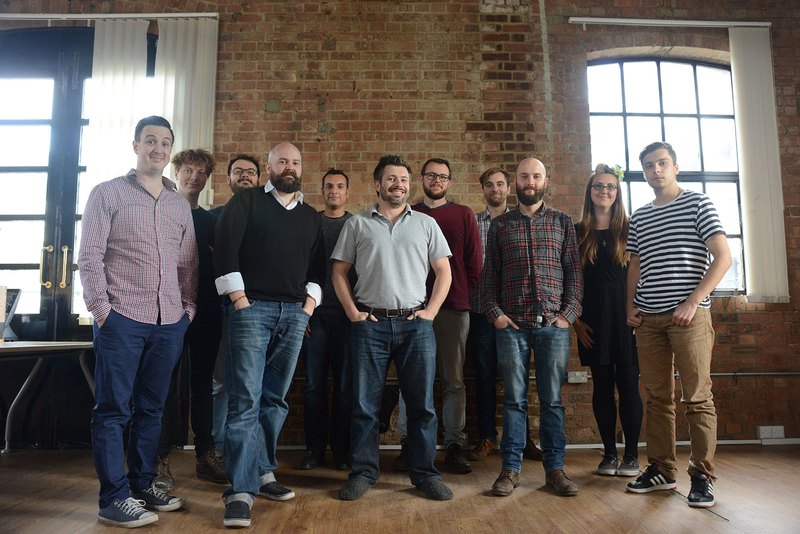
Hindsight might yet prove them right. The effects of Brexit, which had caused those CVAs, got worse, before the hammer blow of Covid arrived a year later. Navigating that was very difficult, probably the toughest time I have had in leadership. I remember the morning of 17th March, a date on which no fewer than three pivotal events in my business life have happened, when Neil and I were working out what to say to the team, nearly thirty people by then, because we did not know whether we would be able to pay them at the end of the month. I reflected on it as it happened, in part one, part two and part three, with a 2022 update.
We recovered strongly, and from a purely commercial perspective Covid may even have worked in our favour. There was more to come though. The war in Ukraine pushed up energy prices, the cost of living crisis followed, and the whole sector ground to a standstill.
By that point I had navigated Kobas through four major crises, growing the business back to where it had been within eighteen months each time. Things were changing though. I had a family to support, and the risk of losing everything I had built in Kobas was not one I could keep taking. I had also had the idea for Nuke From Orbit. After seventeen years, it felt right to move on.
The sale of the business to Vesta proved reasonably straightforward, partly because I had known the CEO personally for a while; he lived near me and we had played a bit of golf together. The whole experience of selling was fascinating. I learned a lot about how I could have positioned the business for sale far earlier, but Vesta were very understanding and it made for a good first experience.
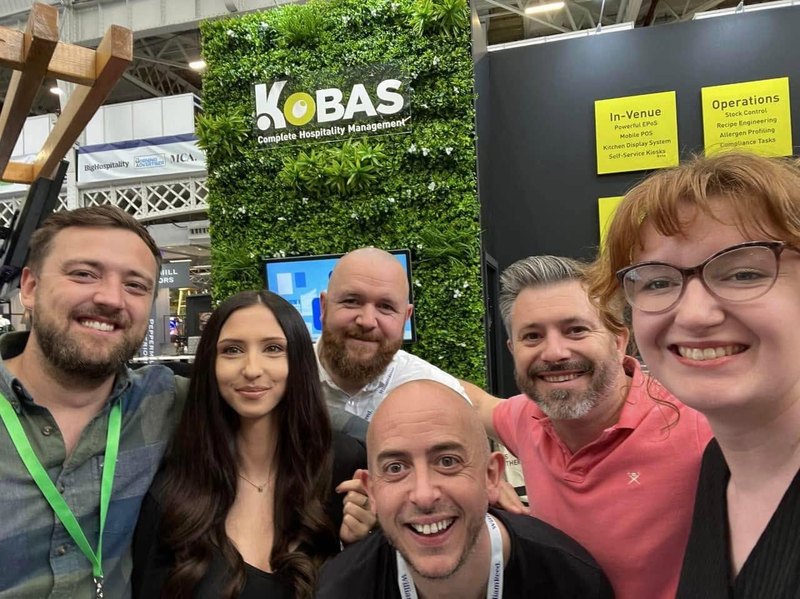
I look back on my Kobas adventure with very fond memories. Hospitality is far and away the most rewarding sector to sell technology into, because all your clients are bars, restaurants and hotels. You also get to see the impact of your work: visit a client on a busy Friday night, watch someone move through the till at lightning speed, and know that it was your work that enabled it. That is a level of feedback you rarely get to experience in technology.